Why a forged wand?
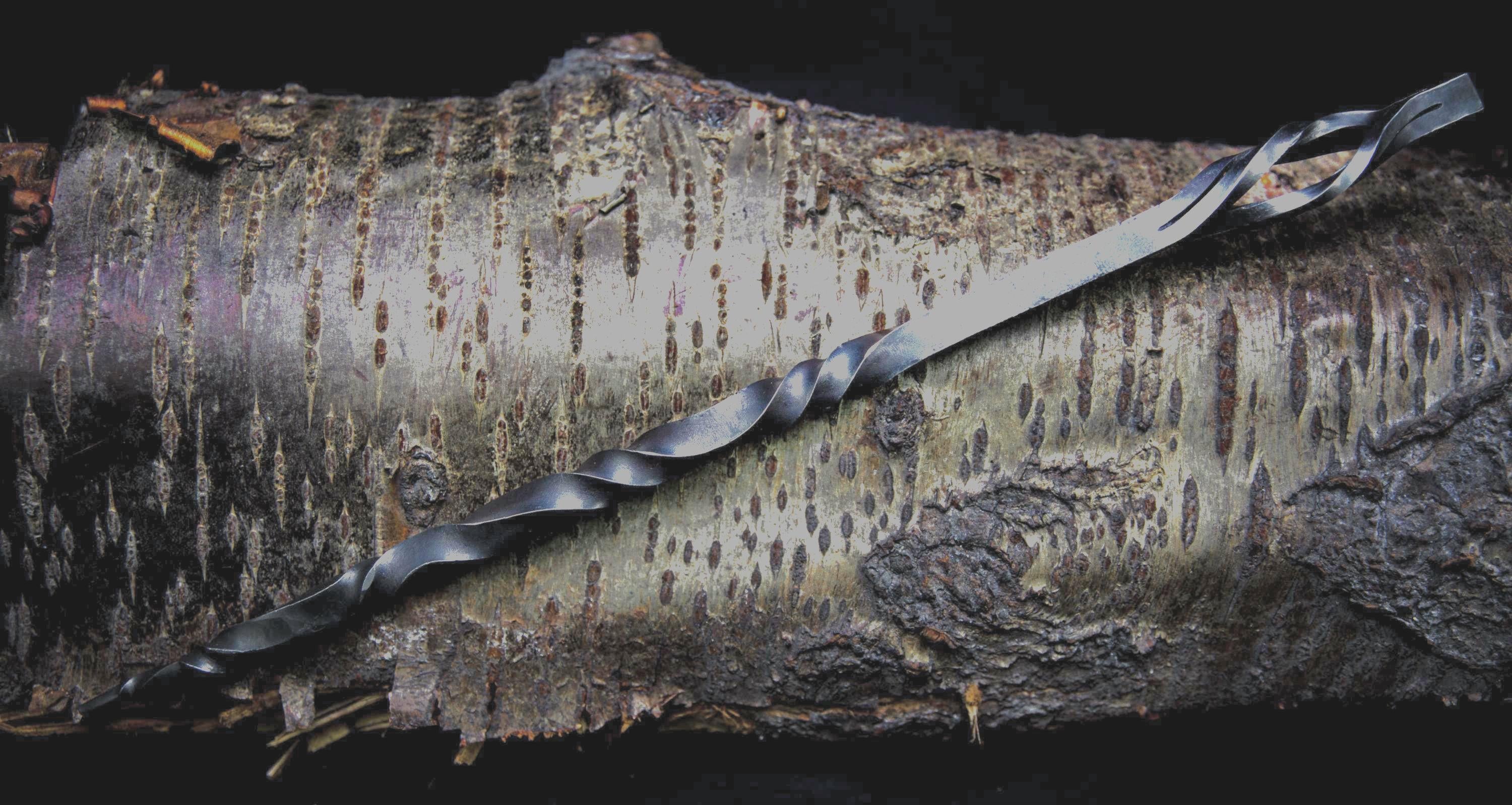
Iron is the old ward. Across Britain and Scandinavia it was nailed over doors, buried at thresholds and carried on journeys, because the stories held that spirits and the fae could not abide it. A wand forged from iron carries that weight. It is a tool of protection and will, not a prop, and it will not snap, warp or rot.
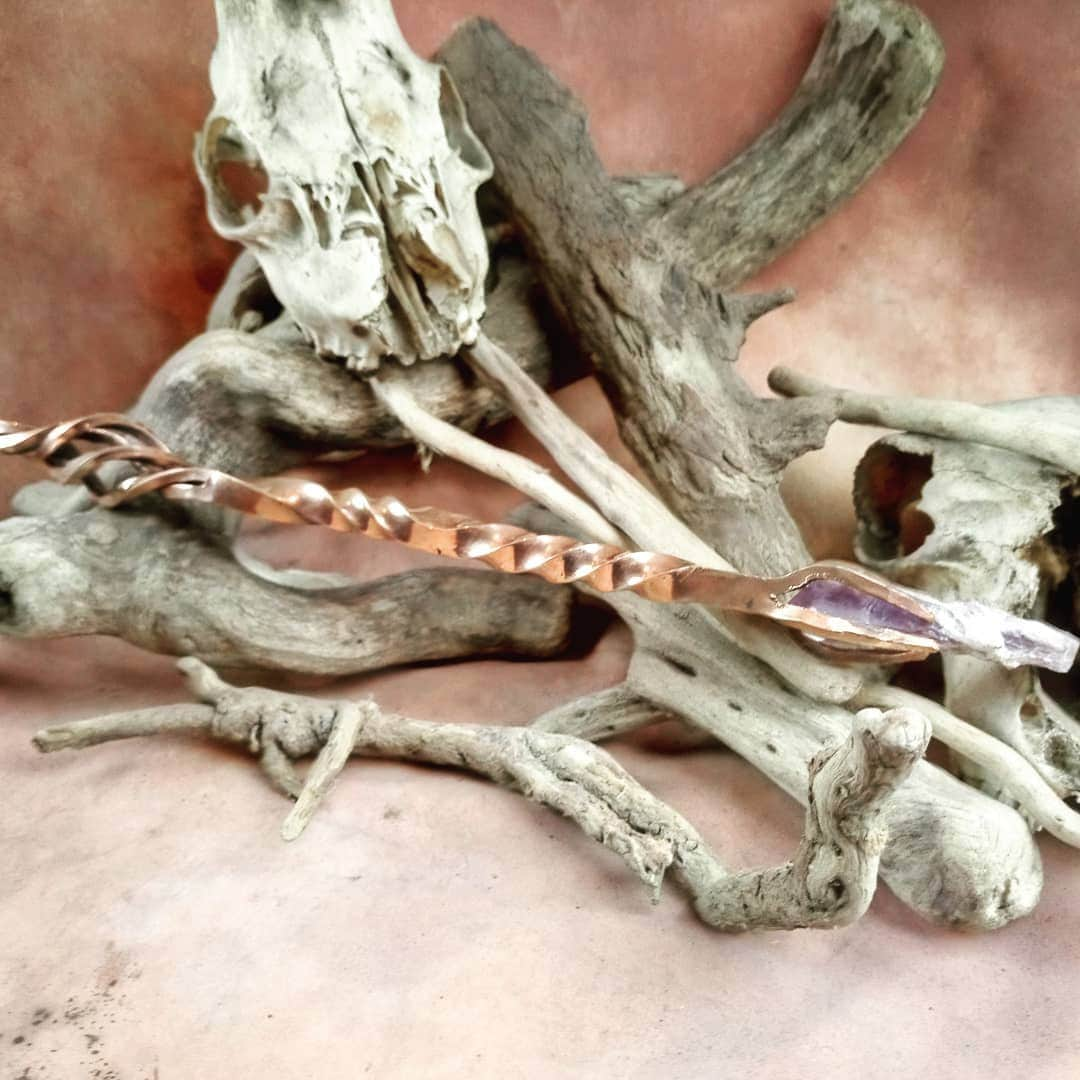
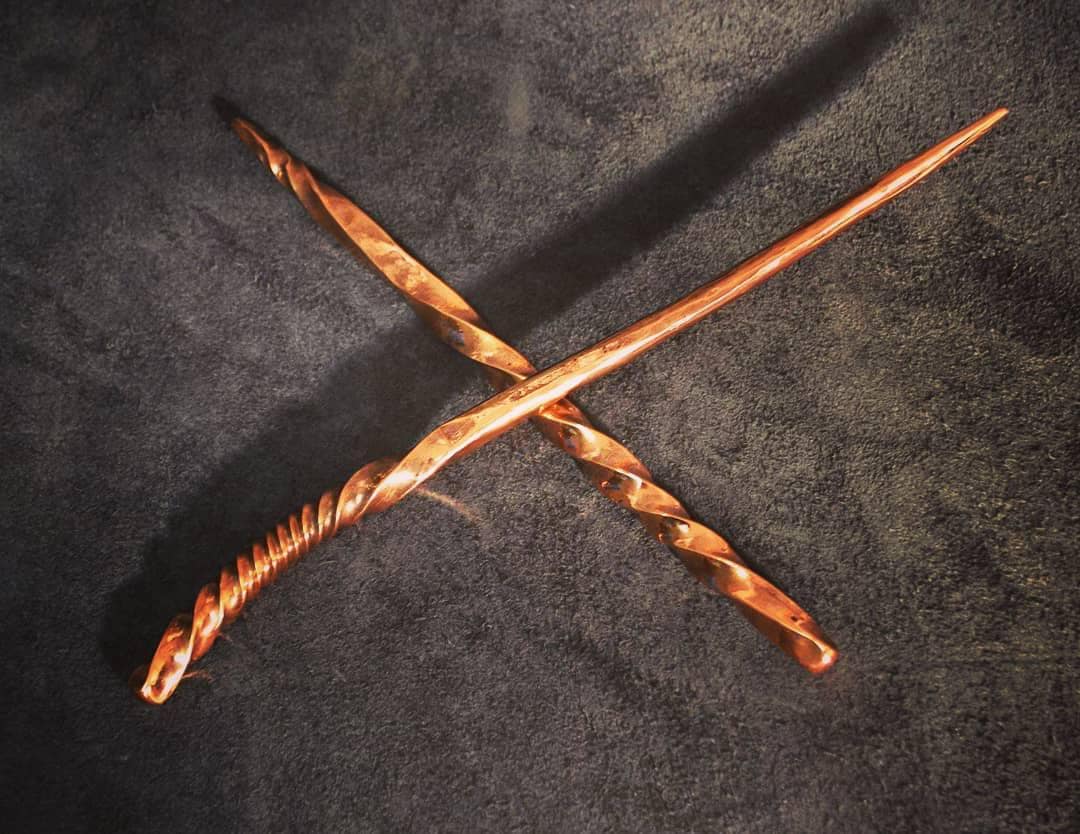
Copper is the other side of the coin. It is a conductor, warm in the hand and long tied to Venus, healing and the drawing-in of energy. I forge copper wands for seeresses and healers, often with a crystal set into the tip: amethyst for clarity and protection, clear quartz as an all-rounder that takes on whatever you bring to it.
Wands for every practice
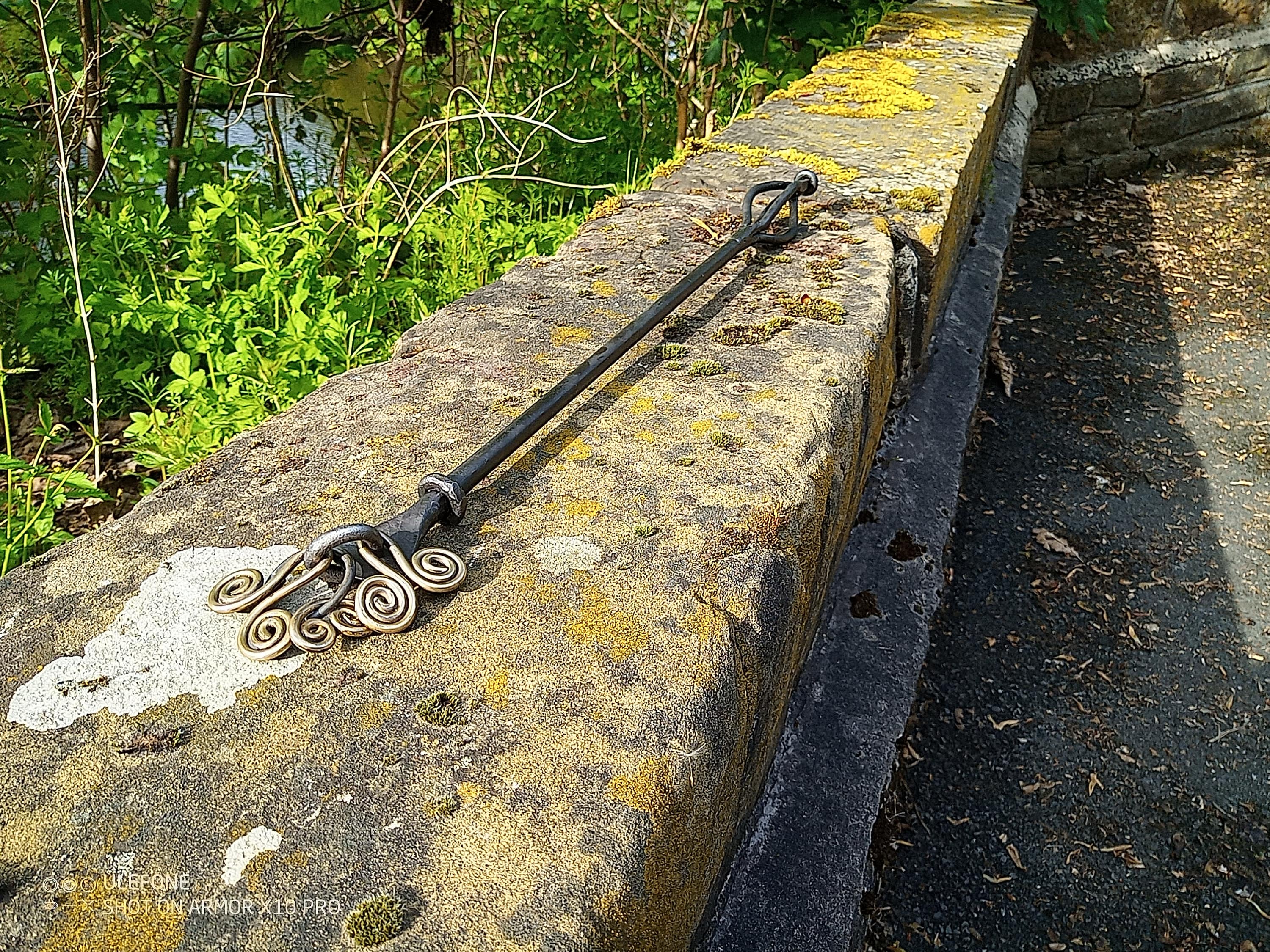
Norse and Heathen: the volva wand, or seidr staff, is based on iron staffs found in Viking-age graves of women who practised seidr. My replica follows the Danish National Museum find from around 900 AD, with a brass tip ornament. Witchcraft and Wicca: the copper seeress and sorceress wands are made for the altar and for ritual work. Ceremonial and chaos magic: the thaumaturge wand and the warlock's stave are plain, heavy and serious. Collectors, cosplayers and book lovers: the twisted wizard wand and the serpent wand look the part on a shelf or at a LARP event and will survive both.
From the Etsy shop
Wands in the shop now
Each wand is a one-off and sells when it sells. If the one you want has gone, ask me and I will forge another.
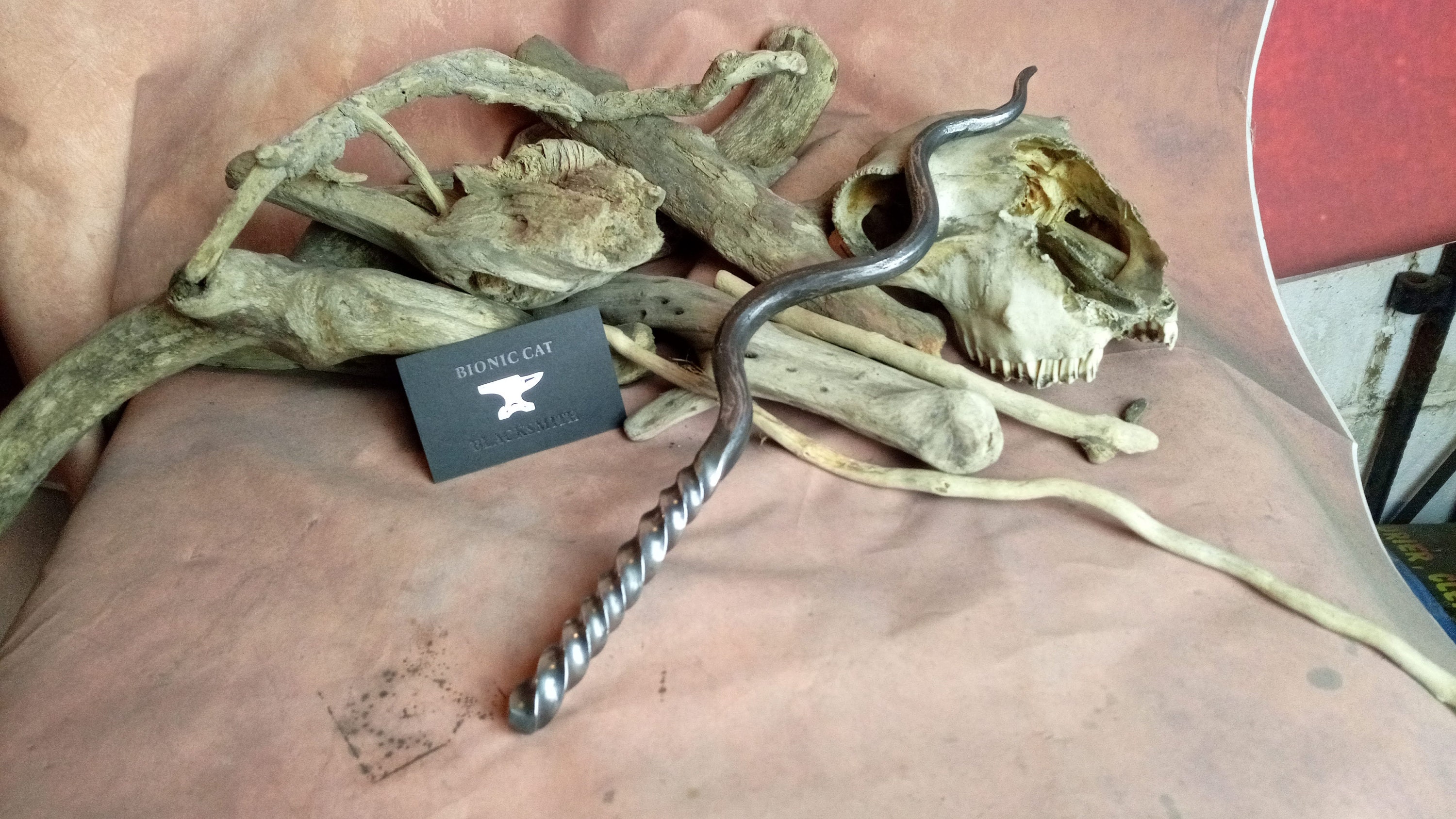
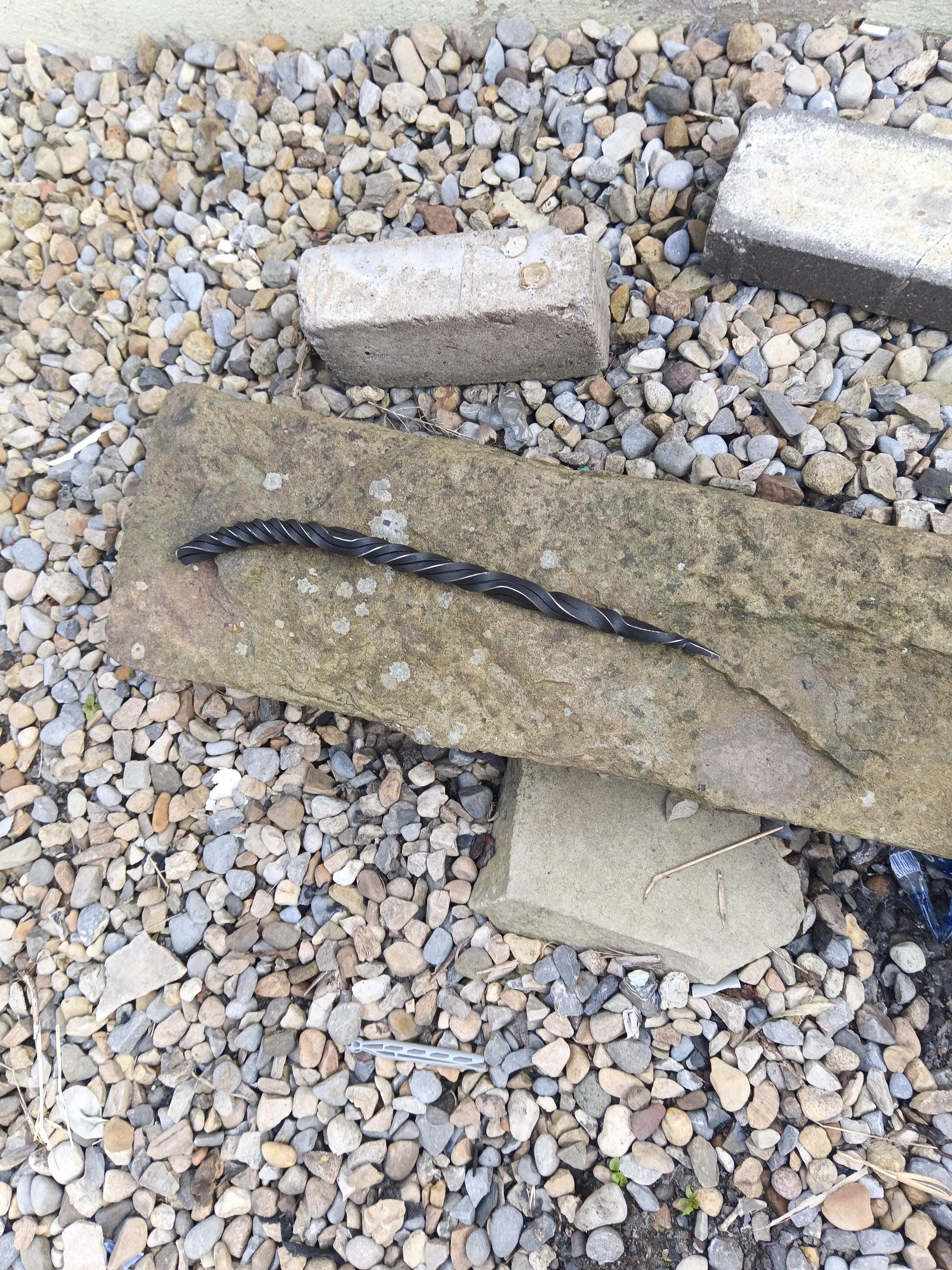
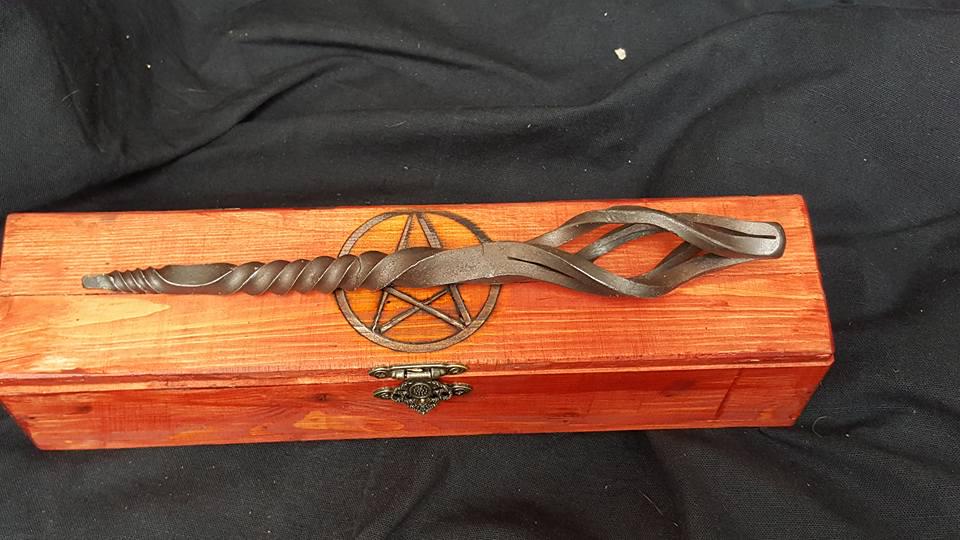
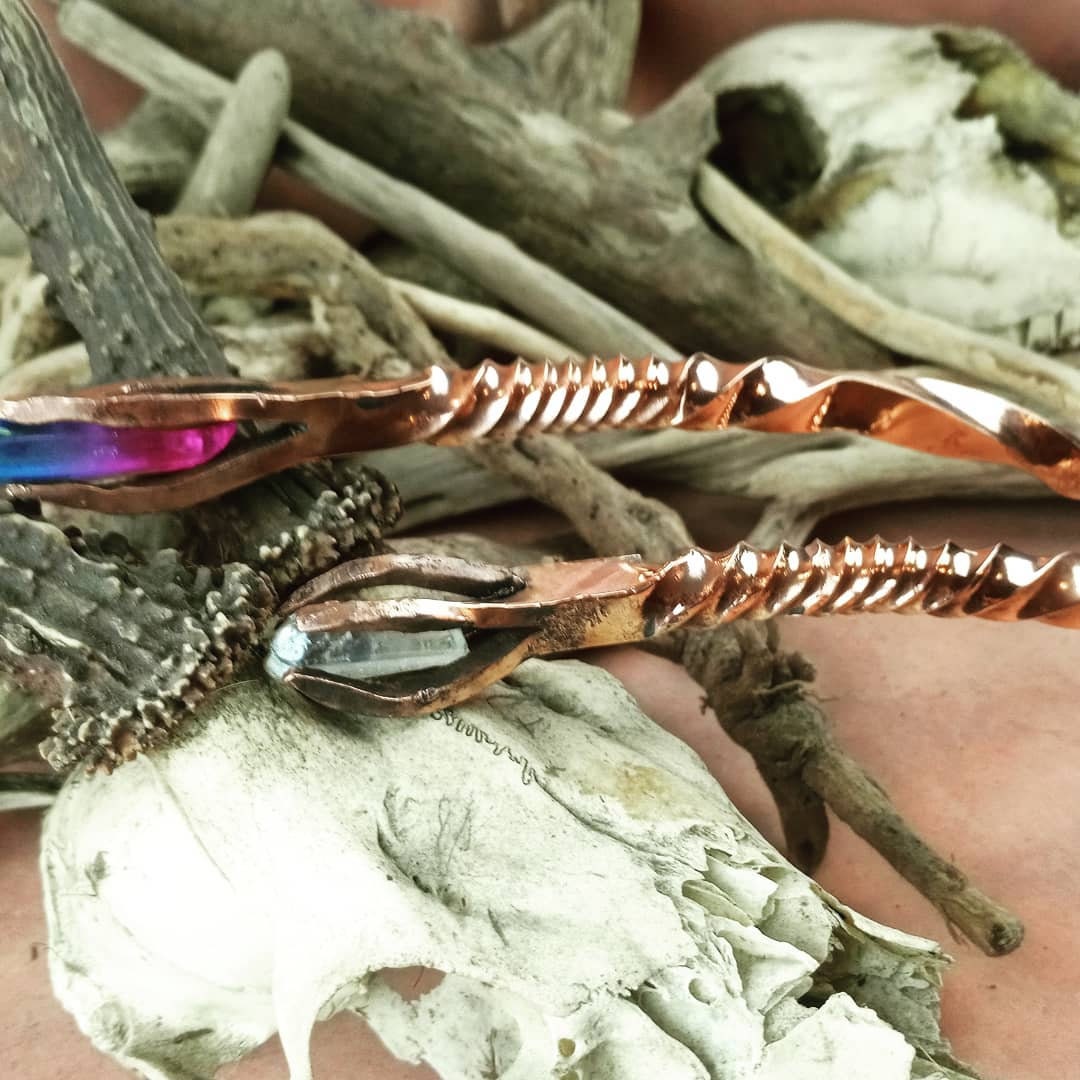
Make it yours
Any wand can be stamped with initials, carved with Elder Futhark runes or etched with longer wording. Tell me the runes or words you want when you order. For a working tool I would keep it to what matters: a bind rune, a name, a single word of intent.
I also forge wands to order: a particular length, a twist you have in mind, a crystal you already own set into the tip, a matching athame stand or a staff. Send me a message with the idea and I will talk it through with you.
How a wand is forged
The bar goes into the fire until it is orange, then it is drawn out on the anvil to a taper. Twists are put in while the metal is hot, by clamping one end and turning the other. Crystals are set cold, in a forged collar that is closed around the stone. Iron wands are finished with a beeswax and oil blend that seals the surface and brings up the colour; copper is polished or left to take on a natural patina over time.
You can watch the process on my YouTube channel, Man Vs. Forge, or come and make your own on a blacksmithing experience day.
Good to know
Frequently asked questions
Are forged iron wands safe to use in ritual?
Yes. The iron is sealed with wax and oil, has no sharp edges, and is far more robust than wood. Some traditions prefer to keep iron away from the fae; if that matters to your practice, choose copper.
What is a volva wand?
A volva was a seeress in Norse society. Iron staffs found in Viking-age graves are thought to be their tools for seidr. My replica is based on the find held by the National Museum of Denmark.
Can you set my own crystal into a wand?
Usually, yes. Send me a photo and the rough size and I will tell you whether it will set well.
Do you make wands for Harry Potter fans and cosplay?
Yes. The twisted wizard wand and the serpent wand are popular with cosplayers and LARPers. They are original designs, not copies of film props.
How much is a custom wand?
Most custom wands come in between £40 and £120 depending on material, length, twists and any crystal. I will give you a firm price before I start.